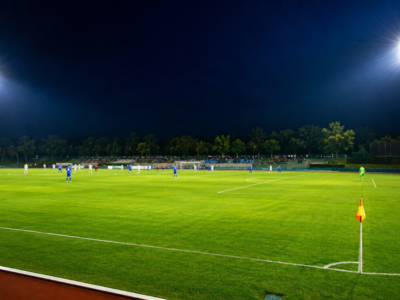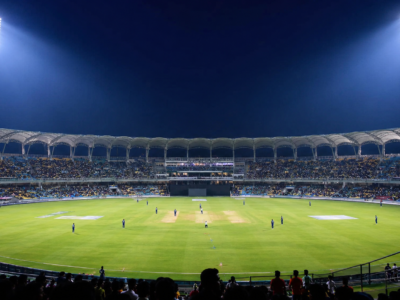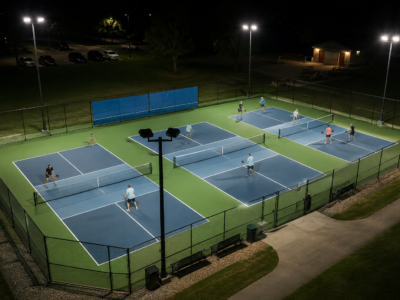

Here is a truth every experienced sports facility owner learns: most of your bookings happen
after sunset. Working people play in the evening. Which means the lighting is not a facility
detail — it is the difference between a venue that earns for 6 hours a day and one that earns for
14. Get it right and the courts pay for themselves; get it wrong and you have built an expensive
daytime-only asset.
Lighting Is a Revenue Decision, Not a Cost
Frame it correctly from the start. Every additional bookable evening hour, across every court,
across every day of the year, is revenue that only exists because the lights are good. Against
that, the cost of quality lighting is small — and skimping on it caps your income permanently.
Match the Light to Each Sport
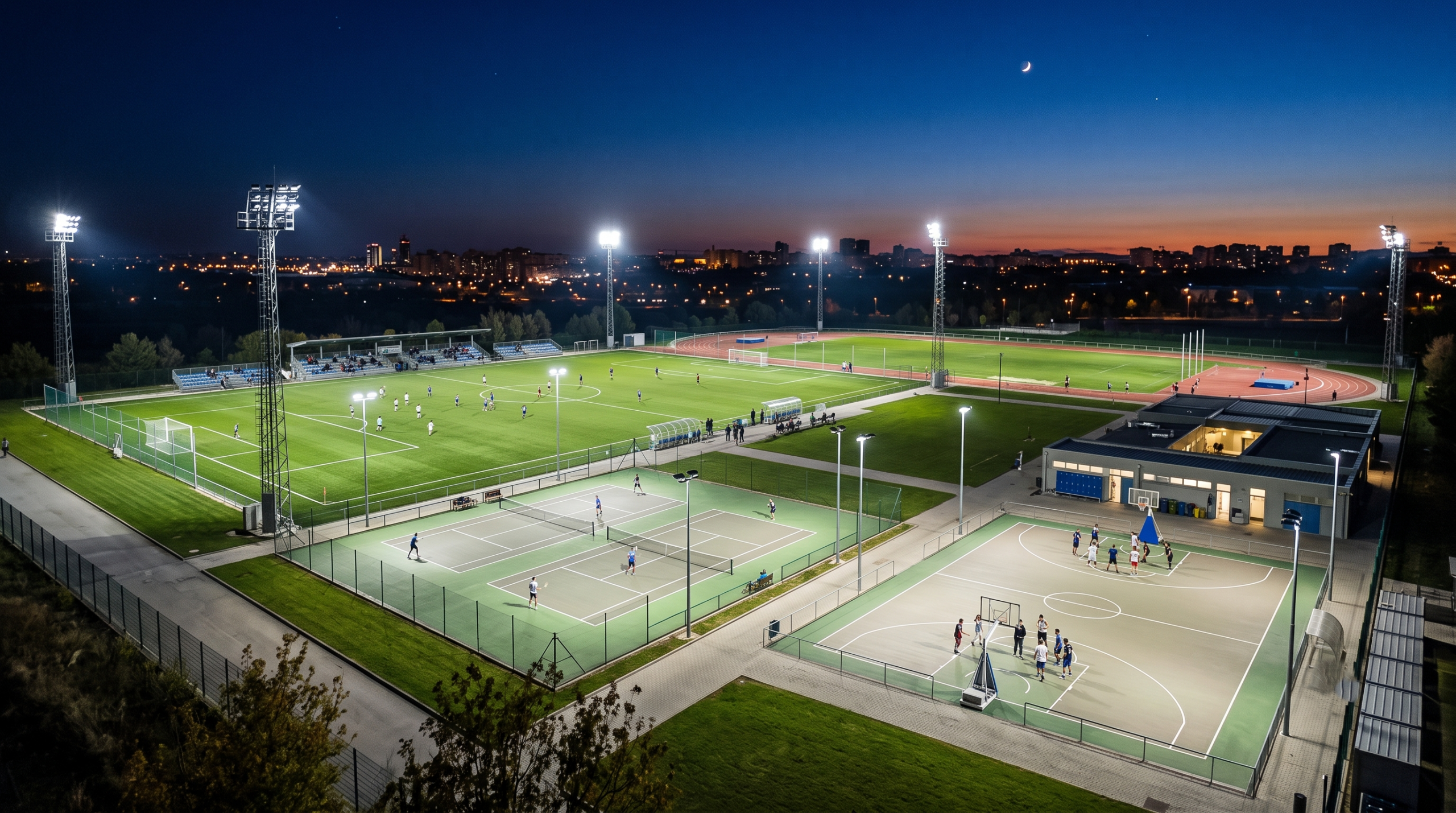
A sports complex is rarely one sport. Each has its own lux target and its own glare
sensitivity — badminton players look straight up, cricketers track a ball against the sky,
tennis needs even cross-court light. Design each surface for its sport, not to a single blanket
number.
| Sport | Recreational Lux | Competition Lux |
|---|---|---|
| Badminton | 300–500 | 750–1000+ |
| Tennis | 200–300 | 500–750+ |
| Cricket (ground) | 200–350 | 750–1500+ |
| Football | 150–200 | 500–800+ |
| Pickleball | 150–250 | 500+ |
| Basketball / multi-court | 300–500 | 750+ |
The Three Specs That Decide Playability
- Lux level for the standard of play you want to host.
- Uniformity — even light, no dark patches where a fast ball disappears.
- Glare control — fixtures placed and shielded so players are never
blinded, especially in look-up sports.
A supplier who quotes only wattage, with no lux or uniformity design, is guessing with your
money.
Pole Layout and Mounting
Outdoor grounds use perimeter poles or
high masts; courts use side poles clear of sightlines. Cross-lighting from both sides removes
shadows. Mounting height is chosen to control glare and spread light evenly — too low creates
glare and hotspots, too high wastes output.
Control Light Spill Onto Neighbours
Many complexes sit near housing. Uncontrolled floodlight spill triggers complaints and
sometimes restrictions on your operating hours — directly attacking your revenue. Shielded optics
and correct aiming keep light on the field and off the neighbours.
Why LED Is the Only Sensible Choice
- Instant on/off — no warm-up between sessions
- 50–70% lower energy on a venue lit many hours a day
- Flicker-free for comfortable play and any streaming/recording
- Long life — fewer changes on tall poles
- Smart controls — light only the courts in use, bill only for those hours
Frequently Asked Questions
How much does lighting affect a sports venue’s income?
Substantially — most bookings are in the evening, so good lighting can more than double
usable, bookable hours.
Can one complex be lit for several sports?
Yes — design each surface for its sport’s lux and glare needs, and use controls to run only
the courts in use.
How do I stop floodlights annoying neighbours?
Use shielded optics and correct aiming to keep light on the field, preventing spill that can
trigger complaints or hour restrictions.
Why choose LED for a sports complex?
Instant-on, flicker-free, 50–70% lower energy, long life, and smart control of individual
courts.
Reway lights complexes court-by-court and ground-by-ground with AURAA and RAVION floodlights on Reway high masts,
plus a free lux-and-uniformity design. Plan your
complex lighting →