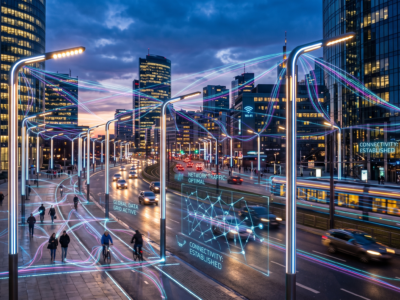
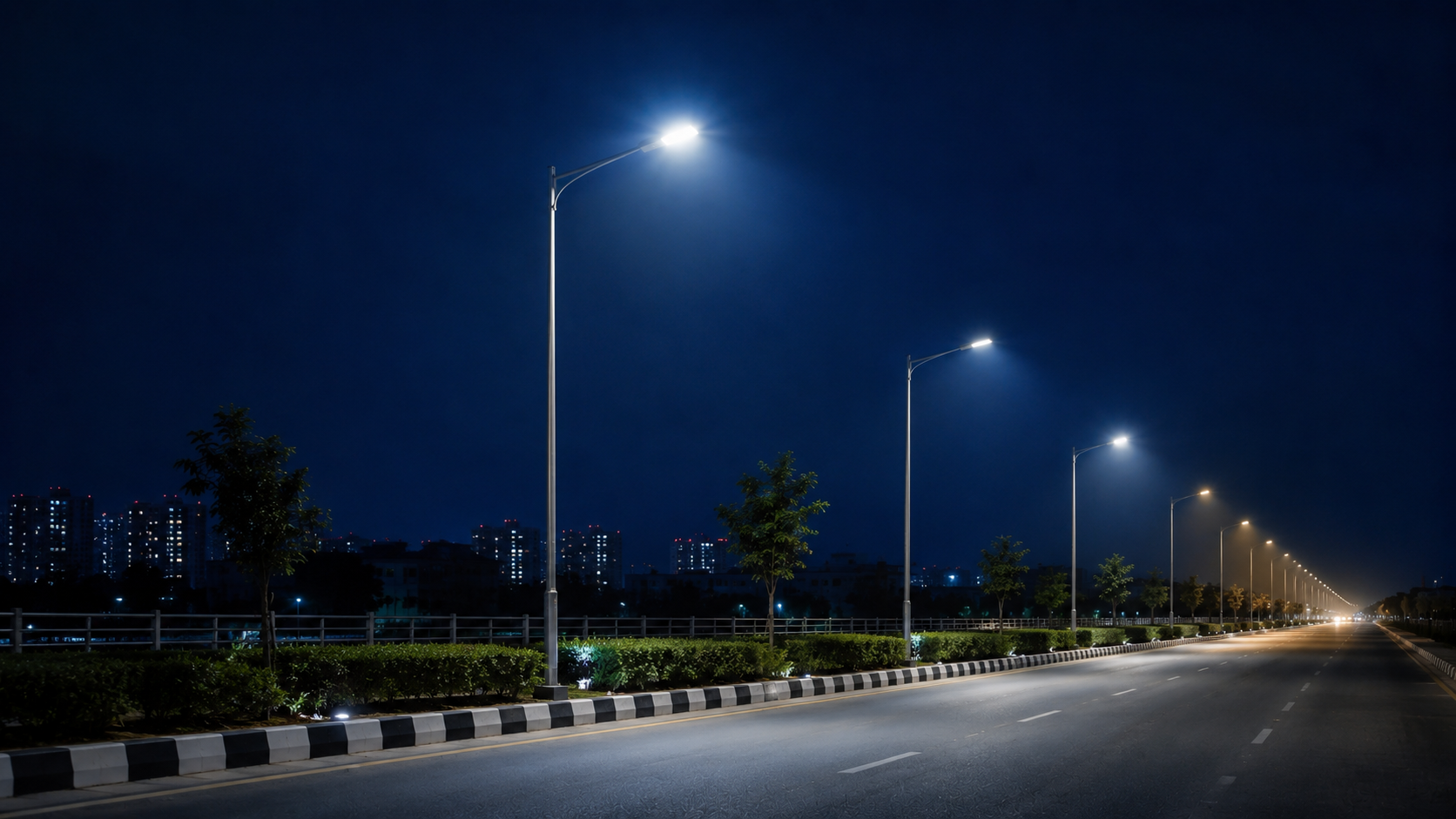

A CCMS was a genuine leap: instead of lights running blindly all night, cities could
schedule, dim and monitor them from one dashboard. But scheduling is still a guess made in
advance. The next stage — adaptive lighting — lets the network respond to what
is actually happening on the street, minute by minute.
From Scheduled to Responsive
| Generation | How It Decides | Limitation |
|---|---|---|
| Traditional | Timer or photocell, full power all night | Huge waste |
| CCMS | Central schedules and remote dimming | Fixed plan, set in advance |
| Adaptive | Responds to live traffic, movement, weather | Needs sensors and data |
| AI-assisted | Learns patterns and predicts demand | Requires maturity and integration |
What Adaptive Lighting Actually Does
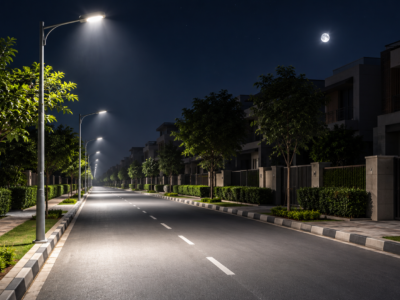
- Traffic-responsive dimming: a quiet road at 2 AM runs at reduced output
and brightens as a vehicle or pedestrian approaches — safety maintained, energy saved. - Weather response: increases output in fog or heavy rain when visibility
drops. - Event awareness: raises levels around stadiums, markets or venues when
crowds are present. - Zone intelligence: different behaviour for arterial roads, side streets,
junctions and pedestrian crossings.
Where AI Adds Real Value
The genuinely useful AI applications in lighting are unglamorous and practical:
Predictive maintenance. Instead of only reporting a failure, the system
watches drift in power draw and performance to flag fixtures likely to fail — so crews replace
them on a planned visit rather than an emergency one.
Pattern learning. Over months, the system learns each road’s real rhythm —
when a market street actually goes quiet, how weekends differ — and tunes dimming profiles
better than any manually written schedule.
Anomaly detection. Unusual consumption patterns can indicate cable theft,
tampering or a fault long before a person notices.
Energy optimisation. Continuously refines profiles to hold the target
service level at the lowest possible consumption.
The Compounding Savings
Each layer builds on the last. Moving from old lamps to efficient LED delivers the largest
single reduction. Adding CCMS
scheduling and dimming pushes total savings towards 70%. Adaptive control then trims further by
avoiding light nobody needs, and AI keeps tuning it over time — while cutting maintenance cost
through prediction rather than reaction.
What to Do Now to Be Ready
You do not need AI today. You need infrastructure that will not block it tomorrow:
- Choose dimmable LED fixtures — non-dimmable hardware ends the road
- Insist on a CCMS with an open API so other systems and sensors can
integrate later - Ensure the platform supports sensor inputs (motion, traffic,
environmental) - Prefer standards-based communication over closed proprietary protocols
- Start collecting energy and fault data now — AI is only as good as the
history it learns from - Check the platform receives software updates, so capability grows without
replacing hardware
Programmes under the
Smart Cities Mission increasingly expect this kind of future-ready specification.
Frequently Asked Questions
What is adaptive lighting?
Lighting that adjusts output in real time based on conditions such as traffic, movement or
weather, rather than following a fixed schedule.
How is adaptive lighting different from CCMS?
CCMS follows schedules set in advance; adaptive lighting responds live to what is actually
happening on the street.
Is dimming street lights at night safe?
Adaptive systems reduce output only when an area is genuinely empty and brighten as people
or vehicles approach, maintaining safety.
Do I need AI to benefit from smart lighting?
No. Most savings come from efficient LED plus CCMS. AI adds further optimisation and
predictive maintenance on top.
Reway’s Smart Lighting & CCMS
platform supports dimming, sensor integration and open API — a future-ready foundation for
adaptive control. Request a demo →