
Lighting is no longer just about illumination — it’s becoming intelligent, connected, and data-driven. As India accelerates its smart-city and energy-efficiency goals, the way we light our streets, factories, and buildings is changing fast. In 2026, smart lighting moves from a “nice-to-have” to a core part of modern infrastructure. Here are the top smart lighting trends every business, municipality, and developer should watch this year.
1. IoT-Enabled Street Lighting & CCMS Go Mainstream
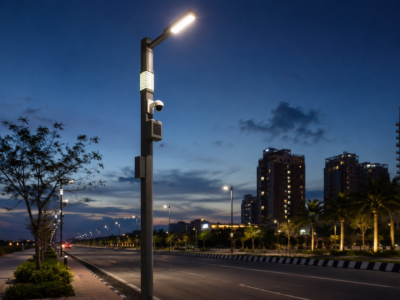
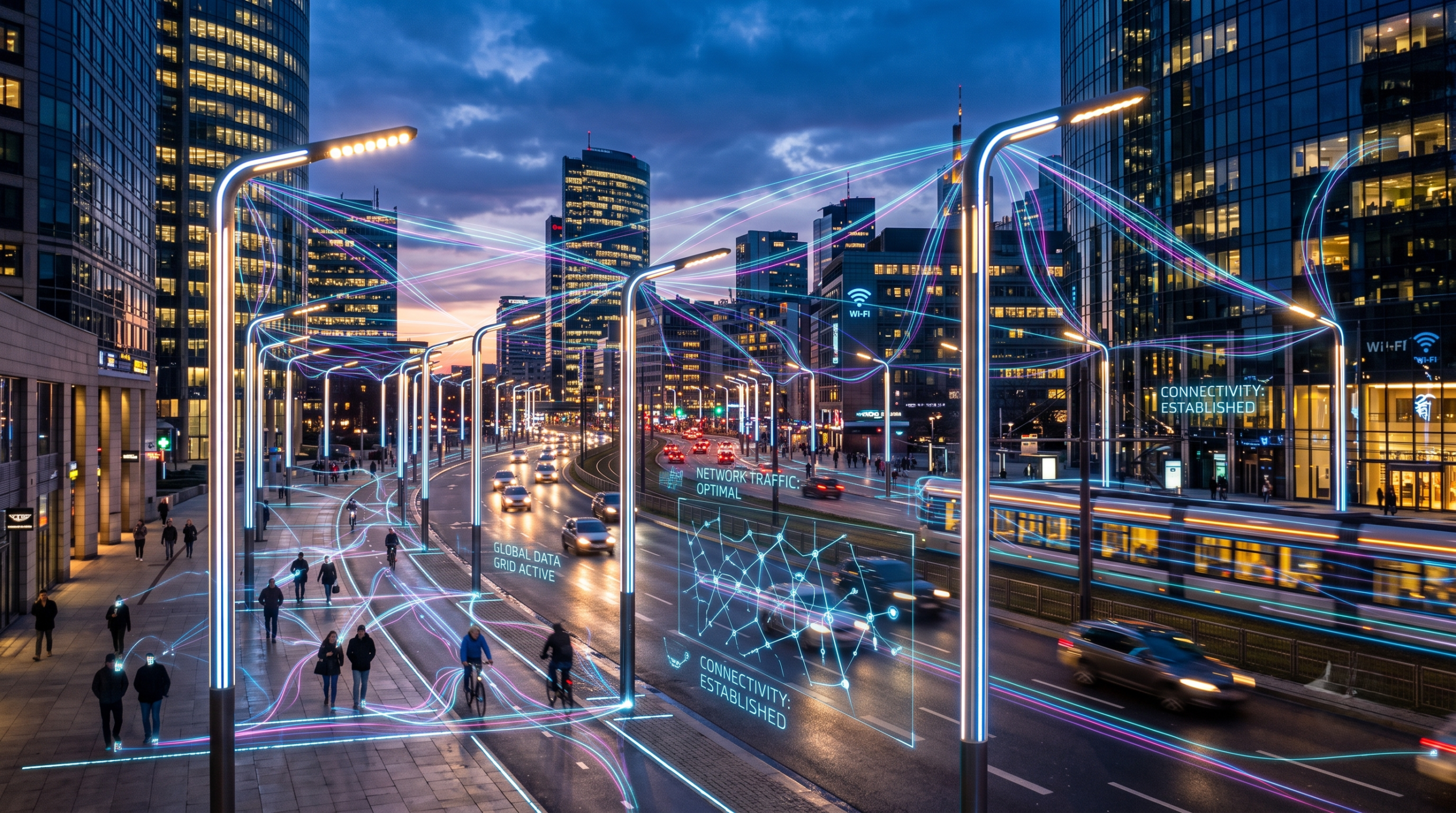
The biggest shift is the move from traditional street lights to connected lighting networks. With a Centralized Control & Monitoring System (CCMS), every street light becomes part of an intelligent network that can be monitored, controlled, and managed from a single dashboard. Cities can detect faults instantly, automate sunrise and sunset switching, schedule dimming, and significantly reduce maintenance efforts.
As more Indian smart-city projects mature in 2026, CCMS is becoming a standard feature rather than a premium upgrade.
- Real-time monitoring of every lighting point
- Remote switching and dimming
- Instant fault detection and maintenance alerts
- Up to 70% reduction in energy and operational costs
2. Adaptive & Sensor-Based Lighting
Lighting is becoming smarter by responding automatically to its surroundings. Motion sensors, daylight harvesting, and traffic-responsive controls ensure that lights operate at full brightness only when necessary, reducing unnecessary power consumption while maintaining safety.
For example, highways can dim during periods of low traffic and automatically brighten as vehicles approach. This “right light at the right time” approach is quickly becoming the preferred standard for new infrastructure projects.
| Technology | Purpose | Primary Benefit |
|---|---|---|
| Motion Sensors | Detect pedestrian or vehicle movement | Lower energy consumption |
| Daylight Sensors | Adjust lighting based on natural daylight | Improved efficiency |
| Traffic-Based Dimming | Changes brightness according to traffic flow | Better safety with reduced operating costs |
3. Solar Street Lighting Expansion
Solar street lighting continues to expand rapidly across India, particularly for highways, rural roads, industrial campuses, and townships where cable trenching is expensive or impractical.
Modern all-in-one solar street lights equipped with LiFePO4 batteries, intelligent charge controllers, and high-efficiency LED modules now offer performance comparable to conventional grid-powered systems while delivering near-zero operating costs.
In 2026, off-grid and hybrid solar lighting projects are expected to grow significantly as organizations prioritize sustainability and long-term savings.
4. Energy Efficiency Becomes a Compliance Requirement
Energy efficiency is no longer just a cost-saving initiative—it is increasingly becoming a regulatory and procurement requirement. Rising electricity costs and stricter standards are driving demand for high-performance LED lighting that delivers maximum illumination with minimum power consumption.
| Requirement | Industry Focus |
|---|---|
| High efficacy LEDs (140–160 lm/W) | Lower operating costs |
| BIS Certification | Regulatory compliance |
| LM-79 & LM-80 Testing | Verified performance and longevity |
| Sustainability Reporting | Environmental responsibility |
5. Human-Centric & Better-Quality Lighting
Modern lighting design is focusing not only on efficiency but also on improving comfort, productivity, and safety. Businesses, educational institutions, hospitals, and public infrastructure increasingly specify lighting that provides the right colour temperature (CCT), high Colour Rendering Index (CRI), minimal glare, and flicker-free operation.
Better-quality lighting creates more comfortable environments while improving visibility and reducing eye strain for occupants.
- High CRI for accurate colour representation
- Optimized CCT for different applications
- Glare-free illumination for improved comfort
- Flicker-free lighting to reduce eye fatigue
Why Smart Lighting Is Defining Infrastructure in 2026
Smart lighting is transforming infrastructure by combining energy efficiency with connectivity and automation. Compared to conventional lighting systems, smart LED solutions offer substantial operational and environmental advantages.
- Remote monitoring and centralized management
- Lower maintenance and operating costs
- Greater energy savings through automation
- Improved public safety with adaptive lighting
- Support for smart-city and sustainability initiatives
Frequently Asked Questions
What is smart lighting?
Smart lighting uses connected LED fixtures, sensors, and communication systems that allow lighting to be monitored, controlled, and automated remotely for greater efficiency and reliability.
What is CCMS in street lighting?
CCMS (Centralized Control & Monitoring System) is an IoT-based platform that enables operators to remotely monitor, switch, dim, schedule, and diagnose street lighting networks from a centralized dashboard.
Why is adaptive lighting important?
Adaptive lighting adjusts brightness according to movement, daylight, or traffic conditions, reducing energy consumption while maintaining appropriate lighting levels for safety.
Are solar street lights reliable for large projects?
Yes. Modern solar street lights with LiFePO4 batteries, smart controllers, and efficient LED technology provide dependable performance for highways, townships, campuses, and rural infrastructure.
Why are BIS, LM-79, and LM-80 certifications important?
These certifications verify the quality, efficiency, safety, and long-term performance of LED lighting products, helping organizations meet regulatory requirements and ensure reliable operation.
Planning a smart lighting project for your city, campus, or industrial facility? Reway helps organizations build future-ready infrastructure with BIS-certified LED lighting, solar lighting, and IoT-enabled CCMS solutions. → Talk to Our Engineers