
A building is designed to be seen in daylight. But for half its life it stands in darkness —
and that is when facade lighting decides whether it disappears into the skyline
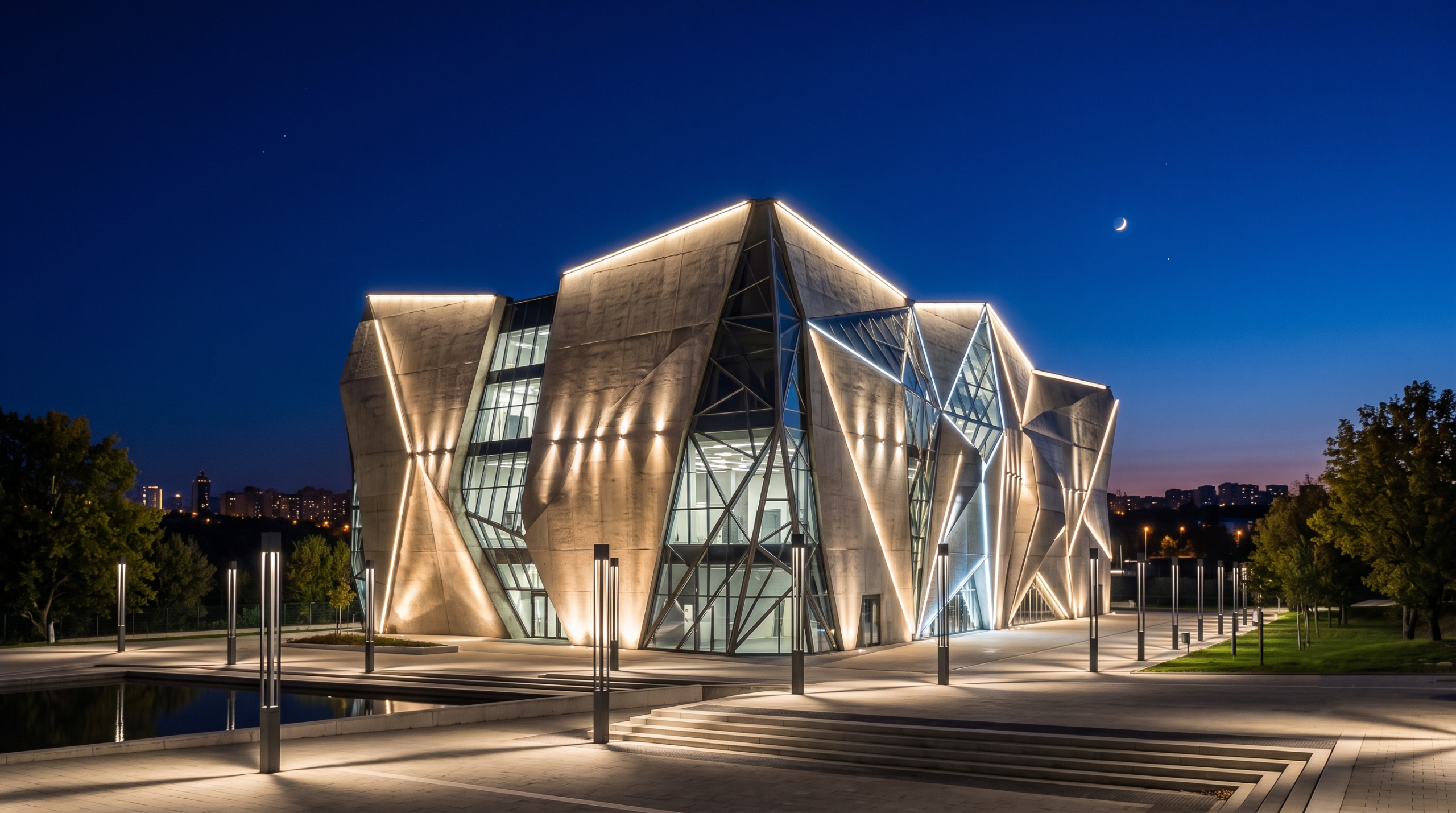
or becomes the landmark everyone photographs. Done well, architectural lighting reveals form,
texture and rhythm. Done badly, it flattens a beautiful building into a glaring billboard. Here
is how the good ones do it.
Light the Architecture, Not the Wall
The most common mistake is simply flooding a facade with light. The result is flat and
lifeless. Great facade lighting is selective — it grazes texture, picks out columns and
cornices, emphasises verticals or horizontals, and uses shadow as deliberately as light. The
goal is to reveal the design, not to make the building bright.
The Core Techniques
| Technique | Effect | Typical Fixture |
|---|---|---|
| Grazing | Rakes light across a surface to reveal texture | Linear / wall washer |
| Flooding / washing | Even wash over a large surface | Wall washer / floodlight |
| Uplighting | Emphasises height, columns, trees | Inground / spot |
| Accent / spot | Highlights features, signage, entrances | Spot / beam projector |
| Silhouetting | Backlights a form against a lit surface | Concealed linear |
| Media / dynamic | Colour-changing, animated effects | DMX RGB/RGBW |
Colour: Restraint Reads as Premium
DMX-controllable RGB/RGBW fixtures can paint a building any colour and animate it for
festivals and events — powerful for stadiums, malls, bridges and monuments. But the buildings
that look most expensive usually use colour sparingly: a refined static scheme most nights,
dynamic colour reserved for occasions. Constant rainbow animation cheapens almost any facade.
The Technical Essentials
- IP66 weatherproofing — these fixtures live outdoors for years
- Beam angle discipline — narrow to graze, wide to wash; the wrong angle
spills light into the sky and windows - Glare and spill control — shields and correct aiming keep light on the
building, not in residents’ eyes (and out of the night sky) - DMX control for any dynamic or colour scheme
- Consistent CCT and quality so the facade reads as one composition
- Concealed mounting — the best fixtures are felt, not seen, by day
Where Facade Lighting Delivers Most
- Corporate headquarters and hotels (brand and prestige)
- Malls and mixed-use developments (footfall and identity)
- Monuments, heritage and civic buildings
- Bridges, flyovers and gateways
- Stadiums and event venues
Avoid These Common Mistakes
- Flooding everything evenly (kills depth)
- Over-using colour and animation
- Ignoring spill onto neighbours and the sky (light
pollution complaints follow) - Mixing mismatched CCTs and fixture qualities
- Visible, ugly daytime fixtures
Frequently Asked Questions
What is facade lighting?
Exterior architectural lighting designed to reveal a building’s form and features at night,
using techniques like grazing, washing, uplighting and accenting.
What is DMX lighting control?
A control protocol that lets facade fixtures change colour and animate in a coordinated way,
used for dynamic and event lighting.
Why do some lit buildings look cheap?
Usually from flat over-flooding, overused colour animation, or mismatched fixtures — good
design uses light selectively and colour with restraint.
What IP rating does facade lighting need?
IP66, since the fixtures are permanently exposed to weather.
Reway’s facade and architectural range —
GLOW, LUMEX, GLORA, BEAM and LINEE with DMX control — is built for landmark projects. Discuss your facade concept with us →