
For a facility manager, warehouse lighting sits at the intersection of three things you are
measured on: safety, productivity, and cost. Get it right and it is invisible — people work fast
and safely and the bill is reasonable. Get it wrong and you get accidents in dim aisles,
mis-picks, complaints, and an energy bill that quietly bleeds the budget. This is the playbook.
Start With Zones, Not Fixtures
A warehouse is not one lighting problem — it is several. Storage, picking, packing, dispatch
and offices each need different light. Lighting the whole building to the brightest zone’s
standard wastes money; lighting it all to the dimmest creates hazards. Map your zones first.
| Zone | Recommended Lux | Priority |
|---|---|---|
| Bulk storage | 150–200 | Safe movement |
| Picking aisles | 200–300 | Label & item visibility |
| Packing / QC | 500–750 | Detail and accuracy |
| Dispatch / loading | 200–300 | Safety near vehicles |
| Offices | 300–500 | Comfort, screens |
| Cold storage | 200–300 | Low-temp-rated fixtures |
The Aisle Rule: Light the Racks, Not the Floor
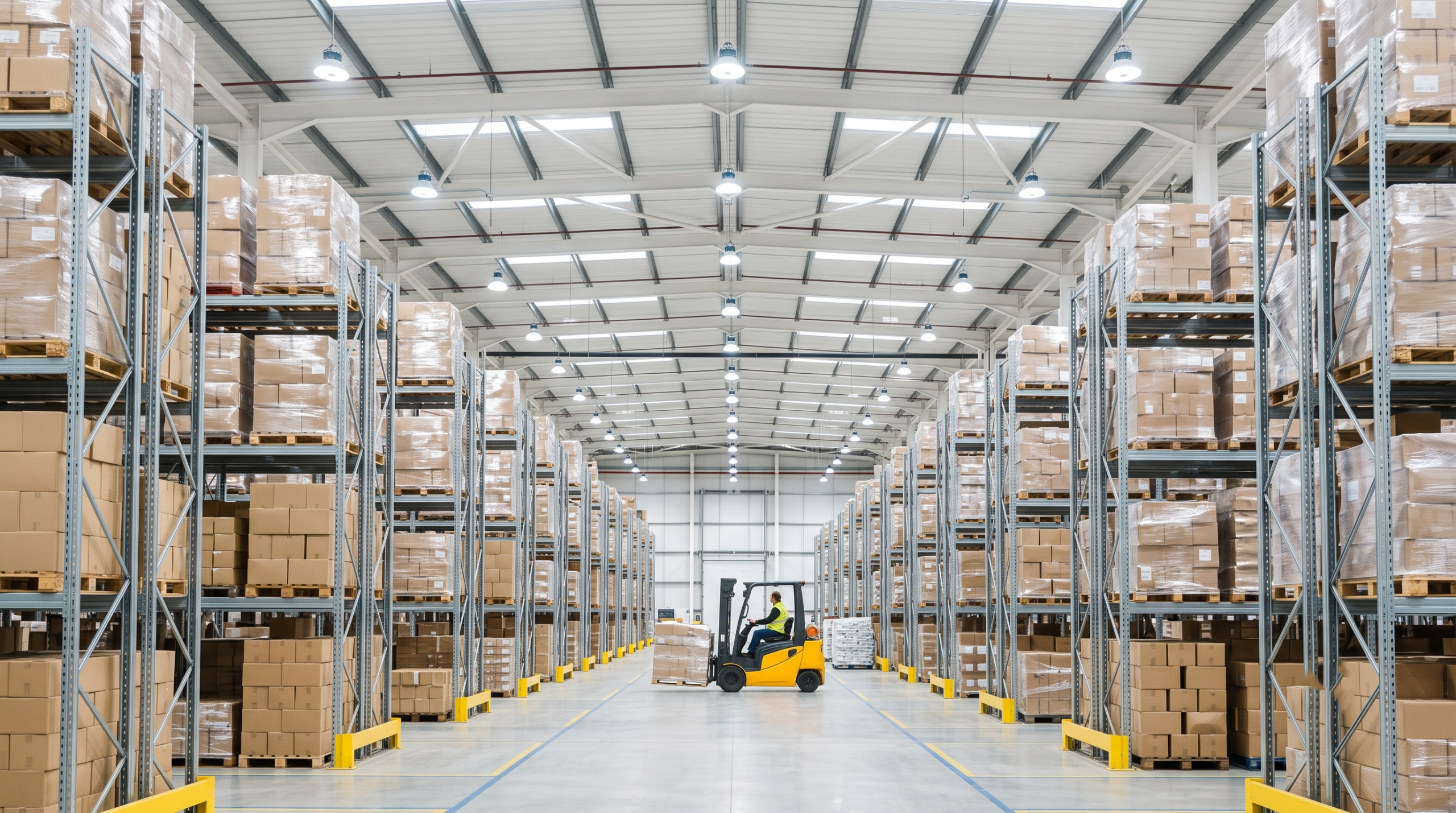
Most designs quote light on the floor — but your team reads shelf faces. In aisles,
linear fixtures mounted along the aisle push light down the corridor and onto the racking far
better than round fixtures, which light the tops of shelves and shadow the bottoms. Always ask
about vertical illuminance on the racks, not just floor lux.
Choosing Fixtures by Ceiling Height
| Ceiling Height | Fixture | Reway Series |
|---|---|---|
| Under 12 ft | Linear batten / low bay | Battens |
| 12–20 ft | UFO or linear high bay | BAYLITE / LINEBAY |
| 20–30 ft | High-power UFO high bay | ULTRABAY / ORBIT |
| 30 ft+ | High-wattage high bay | ULTRABAY / ORBIT |
Controls: The Fastest Payback in the Building
- Aisle occupancy sensors — light aisles in use, dim the rest; in patchy
operations this alone cuts a large share of lighting energy - Zoning — separate control for storage, packing, dispatch, offices
- Daylight harvesting — dim fixtures under skylights automatically
- Scheduling — lower levels on quiet shifts
Do Not Overlook Safety & Environment
- Emergency lighting on escape routes, tested regularly
- Good light at dock levellers, stairs and pedestrian crossings
- IP65/IP66 fixtures in dusty, humid or wash-down areas
- Low-temperature-rated fixtures for cold storage
- Flicker-free drivers (constant CCTV and screens)
The Efficiency Number That Matters
Because warehouses run long hours, efficacy (lm/W) drives your bill. Target
130+ lm/W. Guidance from India’s Bureau of Energy Efficiency reinforces the shift to high-efficacy industrial
lighting.
Frequently Asked Questions
How many lux does a warehouse need?
150–200 lux for bulk storage, 200–300 in picking aisles, and 500–750 in packing and QC
areas.
Should warehouse aisles use linear or round fixtures?
Linear fixtures along the aisle light the full corridor and the racks better; round high bays
suit open areas.
What is vertical illuminance and why does it matter?
It is the light landing on shelf faces — what pickers actually read — so it matters more than
floor lux in storage aisles.
How much can lighting controls save in a warehouse?
A significant share, since aisles are used in bursts; occupancy sensors keep active aisles
lit while dimming the rest.
Reway supplies warehouse-ready fixtures —
LINEBAY, ULTRABAY, BAYLITE — plus a free zoned lighting
design. Get your warehouse lighting plan →