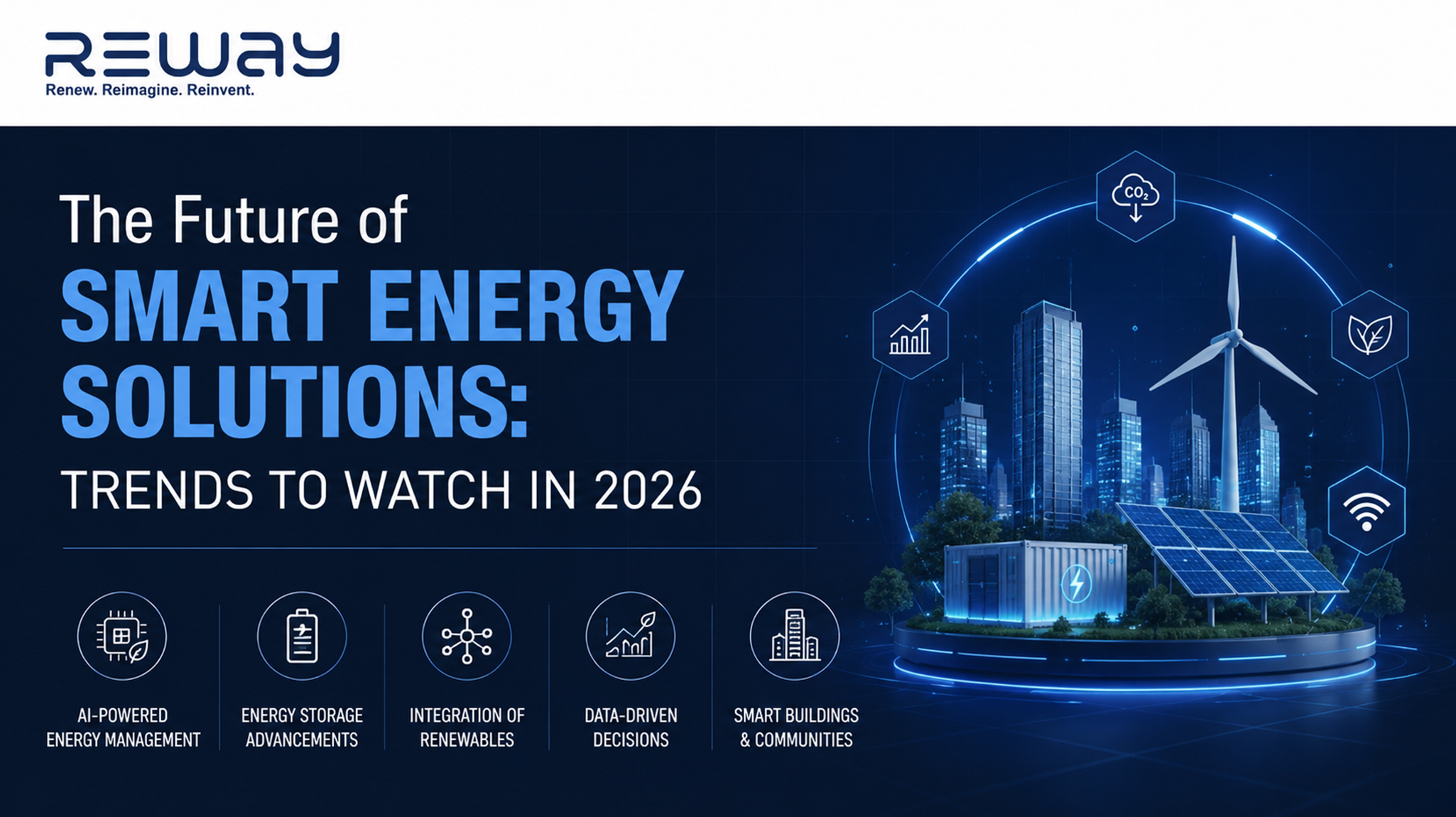

India’s energy needs are growing faster than most countries because of its large population and expanding economy. To manage this growth, the government has set a goal to reach net-zero carbon emissions by 2070. This means relying more on clean and low-carbon energy sources.
Infact, by 2025, India ranked fourth in the world for solar, wind, and overall renewable energy capacity. So, as you can see, there is a strong push towards clean and smarter ways of using energy. From digital power grids and rooftop solar to energy storage and EV charging, the way India produces and uses electricity is changing.
In 2026, these changes will become even more visible. In this article, we look at the key smart energy trends to watch and how they will impact India’s energy future.
Top 3 Smart Energy Trends To Watch in 2026
These renewable energy trends have the potential to be a true game-changer for India’s energy future.
Expansion of Renewable Energy Capacity
India is striving to go clean at an accelerated speed. We are seeing an expansion of solar and wind power at a swift rate. Large solar parks and wind farms are cropping up across the country. And, this is making renewable energy a regular part of how India produces electricity, not just a backup option.
This matters because clean energy helps reduce pollution and lowers long-term power costs. As renewables grow, India depends less on fossil fuels and builds a more sustainable power system.
India has already achieved around 50% of its installed power capacity from non-fossil sources ahead of schedule. States like Rajasthan and Gujarat are leading in solar power, while Maharashtra and Tamil Nadu are major hubs for wind energy.
Smart EV Charging and Grid Integration
Electric vehicles are becoming more common across India, and this means more demand for electricity. To manage this, EV charging systems are getting smarter. We are seeing new charging infrastructure that uses technologies like AI and IoT to decide when and how vehicles should charge, so the grid is not overloaded.
This is important because if too many vehicles charge at the same time, especially during peak hours, it can put pressure on the power grid. Smart charging spreads out this demand and helps avoid power shortages.
Looking ahead, EV charging will be more connected, with app-based controls and coordination with the power grid. States like Uttar Pradesh are already expanding public charging networks to support this.
Smarter Grids and Digital Power Systems
India’s power grid is becoming more intelligent and data-driven. Instead of relying on manual checks and dealing with delayed responses, smart grids use automation, sensors, and real-time monitoring to manage electricity flow better.
This matters because smart grids help reduce power losses, detect faults, and improve overall reliability. They also make it easier to integrate renewable energy like solar and wind, which can be unpredictable.
In India, this shift is supported by the National Smart Grid Mission, which is driving grid digitalisation across states. Its main focus areas include automated systems that fix issues faster, demand response and flexible pricing to reduce peak load pressure, and smart meters that help both utilities and consumers track and manage energy use better.
Conclusion
These were the top three smart energy trends that you must keep an eye out for in 2026. However, this is just the tip of the iceberg. The future of smart energy solutions is exciting to say the least. India will see a more prominent use of AI to manage energy better. There will be more energy storage solutions, and we will also see stronger integration between renewables, electric mobility, and digital grids. As technology improves and policies support growth, clean energy will become a normal part of daily life, at home and at work.