
Energy efficiency sounds simple in theory—use less power, cut costs, and reduce environmental impact. However, achieving real energy efficiency is rarely that straightforward.
Implementing an energy efficiency project requires careful planning, technical expertise, and continuous monitoring. Depending on the industry, the process can be complex, and many businesses begin with good intentions only to experience limited results or stalled progress.
The good news is that these challenges can be avoided with the right approach. In this article, we’ll explore the five most common mistakes businesses make with energy efficiency projects and how to avoid them.
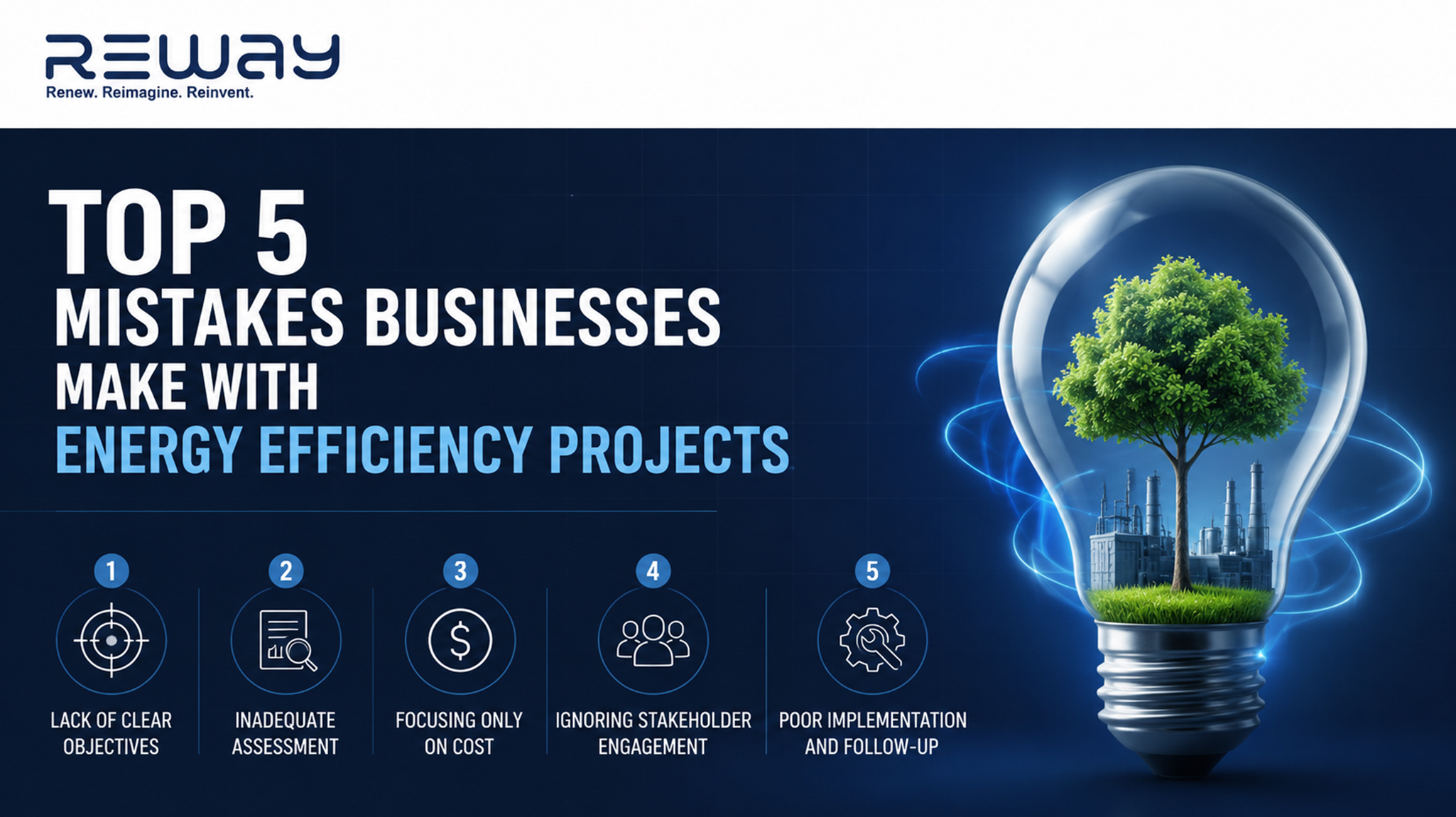
5 Major Mistakes Businesses Make with Energy Efficiency Projects
Understanding these common mistakes can help businesses maximize energy savings and achieve better long-term results.
Skipping Proper Energy Assessments and Audits
Many businesses rush into energy efficiency projects by upgrading equipment or installing new systems without first understanding how and where energy is actually being consumed. Decisions made without a detailed energy audit are often based on assumptions rather than data.
An energy audit provides a clear picture of energy usage, identifies inefficiencies, and highlights the areas with the greatest savings potential. Skipping this important step can lead to investments in the wrong solutions while overlooking the biggest opportunities for improvement.
A comprehensive energy audit lays the foundation for measurable and long-lasting energy savings.
Underestimating the Need for Technical Expertise
Businesses sometimes assume their internal teams can independently manage energy efficiency projects. While in-house teams understand day-to-day operations, designing and implementing energy-efficient systems requires specialized technical expertise.
Without experienced professionals, projects may be improperly planned or executed, resulting in systems that fail to deliver their expected performance. In some cases, equipment may function correctly but still operate well below its full efficiency potential.
Engaging the right experts early in the project helps prevent costly mistakes and improves overall project outcomes.
Poor Financial Planning and Underestimating Project Costs
Another common mistake is viewing energy efficiency as an expense rather than a long-term investment. Focusing only on the upfront cost can discourage businesses from moving forward.
Without preparing a complete project budget, evaluating financing options, or understanding the expected return on investment, cost estimates often become unrealistic from the beginning.
Effective financial planning allows businesses to implement energy efficiency projects with confidence while maximizing long-term savings.
Lack of Awareness About Available Solutions and Incentives
Many organizations are not fully aware of the wide range of energy-efficient technologies available today. They may also overlook government schemes, financial incentives, and industry programs that support energy-saving investments.
India’s energy-efficiency landscape continues to evolve, with new technologies and support programs being introduced regularly. Businesses that stay informed are better positioned to reduce energy consumption while taking advantage of available incentives.
Researching available technologies and government support before starting a project can significantly improve both technical and financial outcomes.
Ignoring Monitoring, Verification, and Follow-Up
Some businesses assume their work is complete once new energy-efficient systems are installed. However, without regularly monitoring system performance and verifying actual energy savings, it becomes difficult to determine whether the project is delivering the expected results.
Over time, poor maintenance, equipment issues, or operational changes can reduce energy savings if they are not identified and corrected. Continuous monitoring ensures that systems continue performing efficiently throughout their lifespan.
Regular performance tracking helps businesses maintain long-term energy savings and maximize the return on their investment.
Conclusion
Energy efficiency remains one of the most practical and cost-effective ways for businesses in India to reduce electricity costs and lower carbon emissions. Yet many projects fall short because of avoidable planning and implementation mistakes.
By conducting thorough energy audits, involving experienced professionals, planning finances carefully, staying informed about available technologies and incentives, and continuously monitoring performance, businesses can achieve significantly better results from their energy efficiency initiatives.
If you’re planning an energy efficiency project and need expert guidance, Reway Innovations can help you design and implement solutions that deliver measurable, long-term savings. Get in touch with our team today.